Printing technology: why printing on a product is different from printing on a reel
The market for continuous web printing is much larger and more standardized than the specialized market for direct printing on individual rigid products. Much of the available equipment, technical literature and training consequently concentrates on paper, labels and flexible packaging.
This influences the technical approach. In web printing, engineers develop and optimize the process around established substrate specifications and continuous transport. Direct-product printing requires additional engineering around the individual component: its geometry, dimensional variation and response to printing force.
The ink-transfer principle may remain familiar, but the mechanical conditions change. Selecting a suitable technology therefore starts with understanding how the actual product can be positioned, supported and printed consistently.
What continuous printing provides
Much industrial printing takes place on continuous webs of paper, plastic film, labels and flexible packaging. Newspapers and magazines also draw on established paper-printing processes, both web-fed and sheet-fed. Flexography, gravure and offset have developed around these applications, with controlled material transport and repeatable presentation of the printing surface.
These applications use specified, controlled and standardized substrates, supplied in defined grades and nominal thicknesses with agreed tolerances. The printing process can be configured around these known material characteristics.
In contact web printing, an impression cylinder supports the material from the opposite side at the printing nip. This provides the reaction force needed for ink transfer. The film or paper does not have to resist the printing load through its own stiffness. The objective is controlled, consistent contact; excessive pressure is not inherently beneficial.
Process optimization extends beyond the printing unit
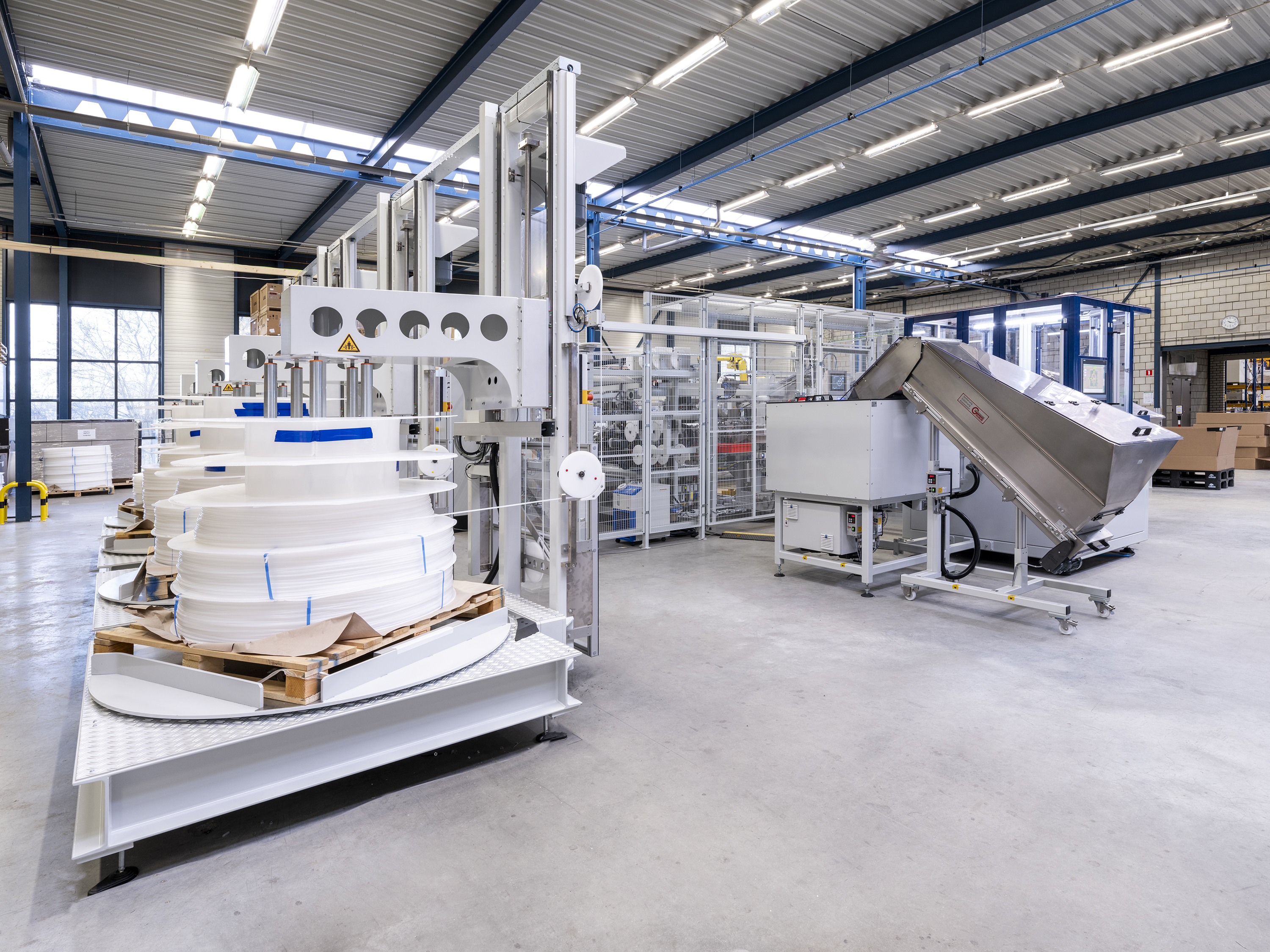
In web printing, optimization includes web handling, ink delivery, registration, drying or curing, and consistent reproduction at production speed.
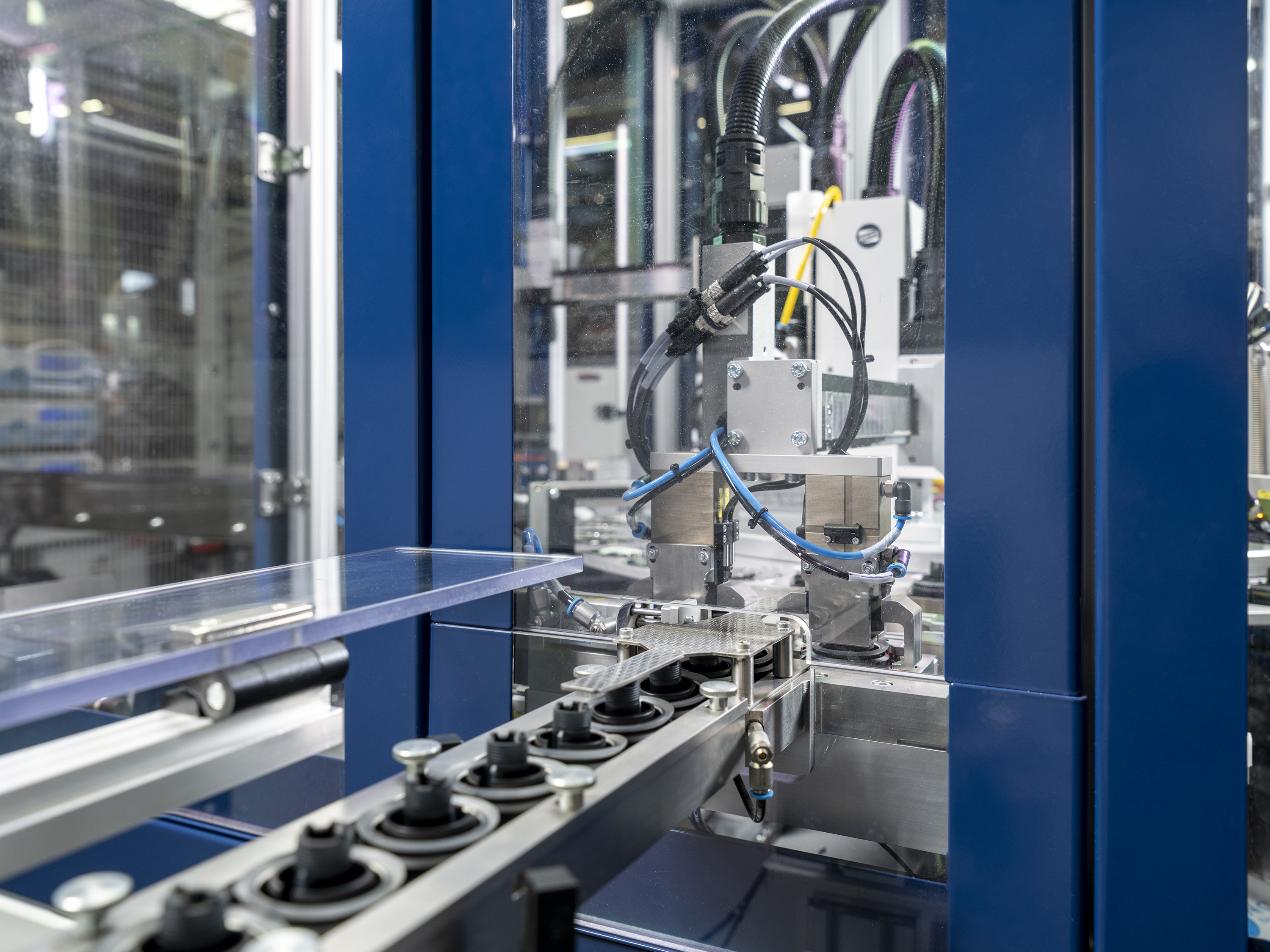
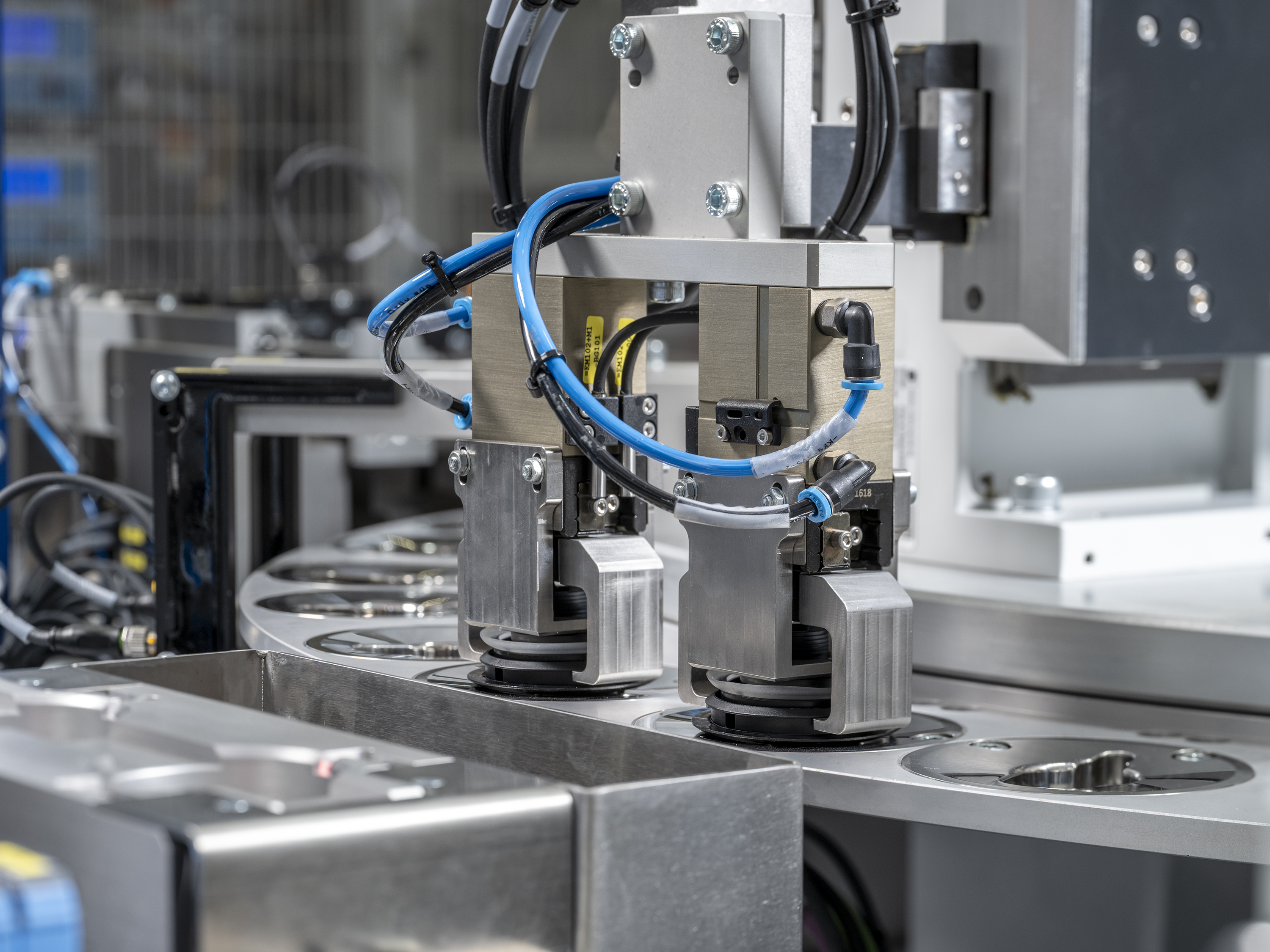
For individual products, engineers must also establish how each component will be fed, oriented, supported and moved through the printing process. A change in product geometry can require different tooling, support or motion, even when the ink and printing principle remain unchanged.
A print defect on a molded product may originate in the printing unit, but it may also result from dimensional variation, inadequate support or movement under load. Adjusting ink delivery or printing pressure alone may leave the underlying cause unresolved.
Established printing knowledge remains essential. Its application must account for the mechanical behavior of the product and its interaction with the automation.
A few microns of ink, a much larger mechanical challenge
The deposited ink layer can be extremely thin. Dry offset typically produces a layer of only a few micrometers, while pad printing commonly leaves a cured ink film of approximately 4–6 micrometers. These values are process-dependent; screen printing, for example, can produce substantially thicker deposits.
Dimensional variation in molded products can exceed the thickness of these thin ink layers. The printing system must therefore maintain consistent transfer while the position and shape of the receiving surface vary by more than the thickness of the ink being applied. The ink layer cannot be expected to compensate for that mechanical variation.
This does not mean that every product dimension must be controlled within a few micrometers. It means that product support, positioning and the compliance of the printing interface must work together to maintain suitable contact.
The consequence is visible in dry-offset printing on long, flexible products. Contact with the blanket can bend the product away from the print surface. Where contact is lost, ink transfer becomes incomplete. Increasing pressure may increase the deflection rather than restore the missing print.
Some products can be supported internally on a mandrel. Others have restricted access, flexible walls or print areas that make support difficult. A more compliant blanket may accommodate some variation, but its suitability depends on the product, artwork and required detail. Product support and controlled printing forces are therefore central design considerations.
Variation begins before the printing machine
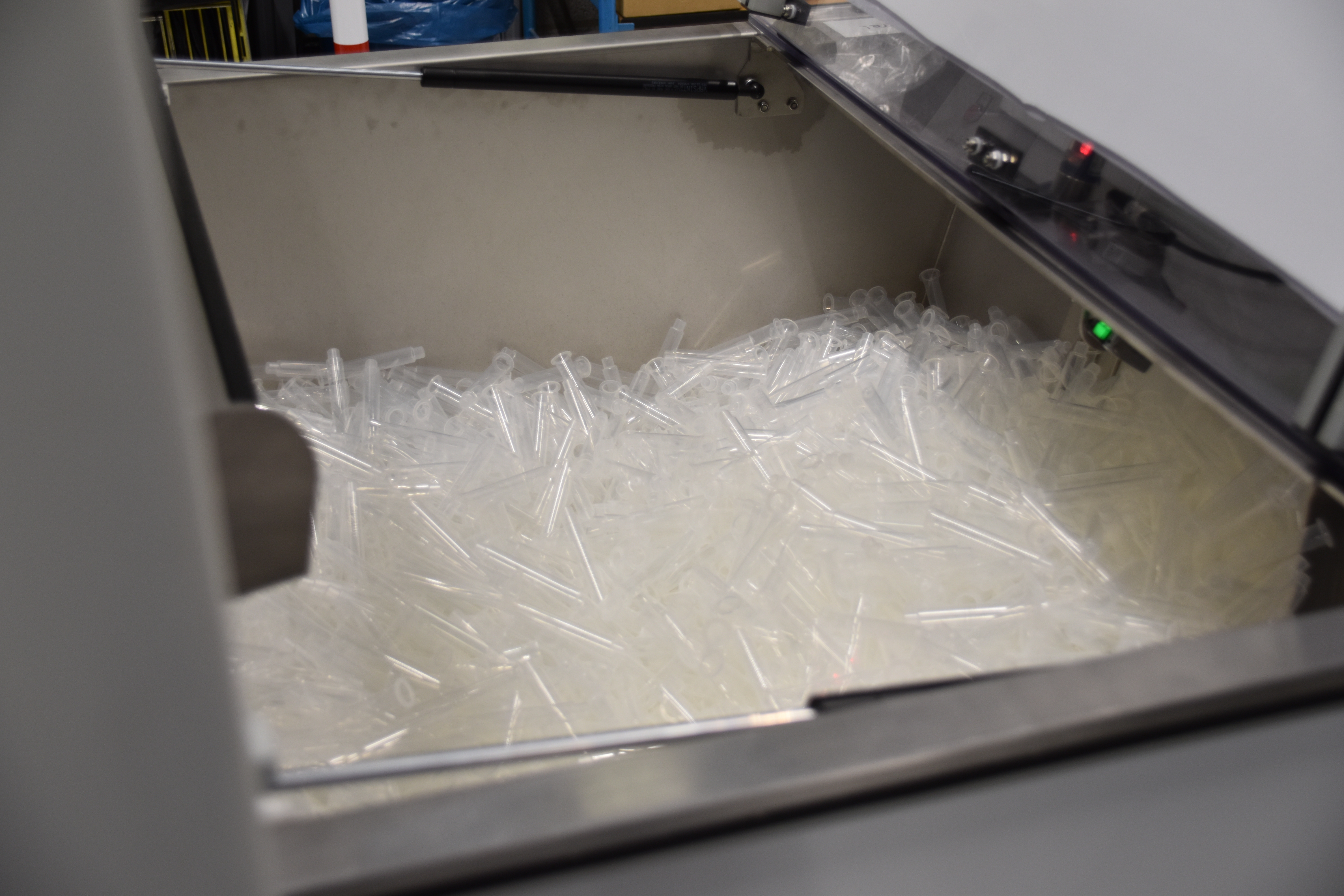
Molded-part dimensions depend on the tool, material and molding process. Cooling and shrinkage affect the final geometry; inconsistent wall thickness can contribute to warpage. A nominal drawing therefore does not describe every part that the printing machine will receive.
With multiple cavities, consistency must also be maintained from cavity to cavity. Balanced filling and packing matter: an unbalanced runner system can produce differences in part weight and dimensions. Increasing cavity count expands the number of cavities that must be balanced and verified. It does not, by itself, mean that dimensional accuracy will deteriorate.
Where production uses several molds, including newer and older tools, their actual output should be compared. If those molds produce different dimensional distributions, the printing process must accommodate the combined range. Mold age alone is insufficient to establish that difference; measurements provide the relevant evidence.
Greater variation also affects process capability. With specification limits and process centering unchanged, an increase in the variation used to calculate Cpk reduces that index. For printing, the practical question is how the measured dimensional spread affects support, contact and print position.
Process optimization extends beyond the printing unit
In web printing, optimization includes web handling, ink delivery, registration, drying or curing, and consistent reproduction at production speed.
For individual products, engineers must also establish how each component will be fed, oriented, supported and moved through the printing process. A change in product geometry can require different tooling, support or motion, even when the ink and printing principle remain unchanged.
A print defect on a molded product may originate in the printing unit, but it may also result from dimensional variation, inadequate support or movement under load. Adjusting ink delivery or printing pressure alone may leave the underlying cause unresolved.
Established printing knowledge remains essential. Its application must account for the mechanical behavior of the product and its interaction with the automation.
A few microns of ink, a much larger mechanical challenge
The deposited ink layer can be extremely thin. Dry offset typically produces a layer of only a few micrometers, while pad printing commonly leaves a cured ink film of approximately 4–6 micrometers. These values are process-dependent; screen printing, for example, can produce substantially thicker deposits.
Dimensional variation in molded products can exceed the thickness of these thin ink layers. The printing system must therefore maintain consistent transfer while the position and shape of the receiving surface vary by more than the thickness of the ink being applied. The ink layer cannot be expected to compensate for that mechanical variation.
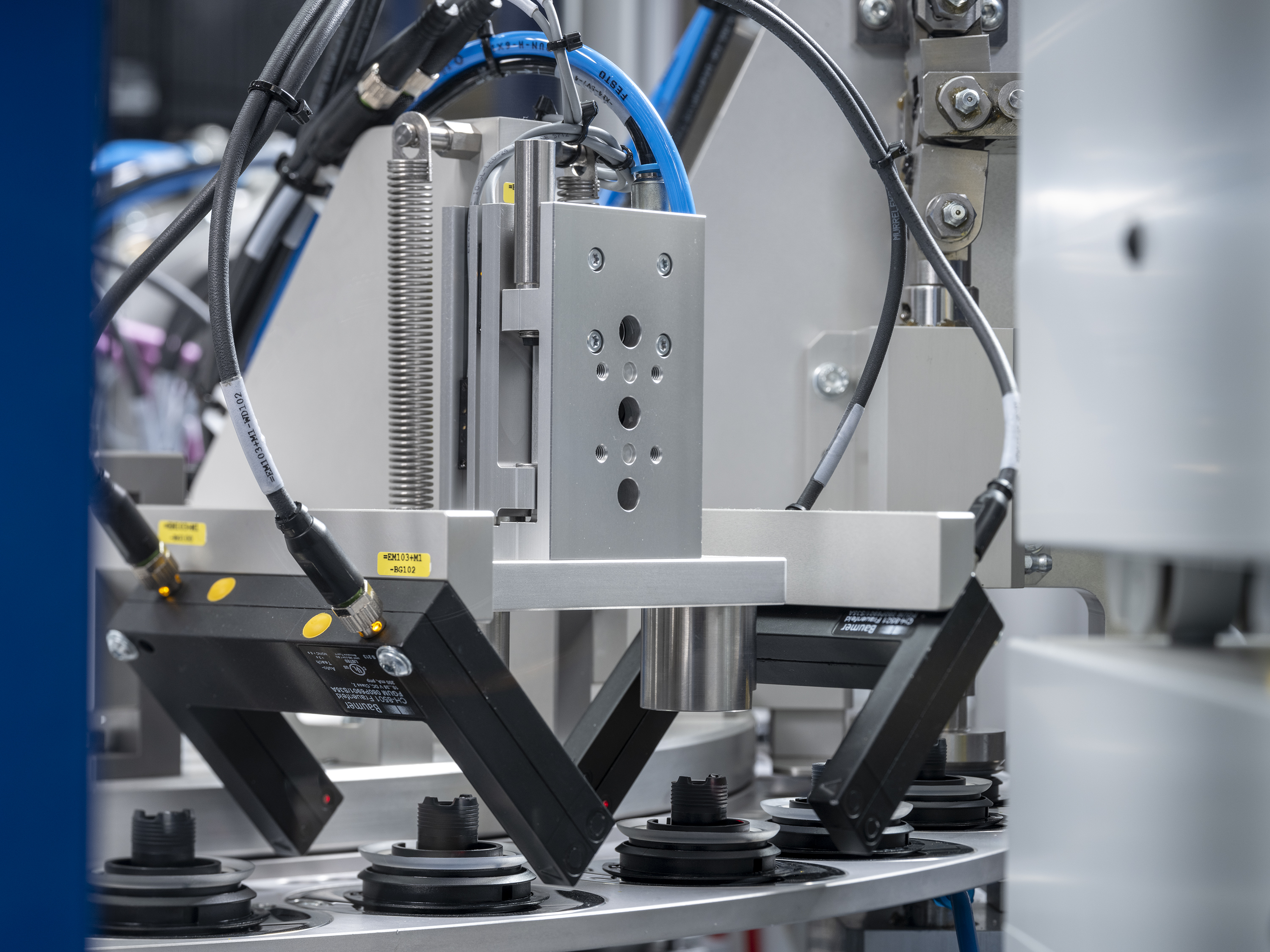
This does not mean that every product dimension must be controlled within a few micrometers. It means that product support, positioning and the compliance of the printing interface must work together to maintain suitable contact.
The consequence is visible in dry-offset printing on long, flexible products. Contact with the blanket can bend the product away from the print surface. Where contact is lost, ink transfer becomes incomplete. Increasing pressure may increase the deflection rather than restore the missing print.
Some products can be supported internally on a mandrel. Others have restricted access, flexible walls or print areas that make support difficult. A more compliant blanket may accommodate some variation, but its suitability depends on the product, artwork and required detail. Product support and controlled printing forces are therefore central design considerations.
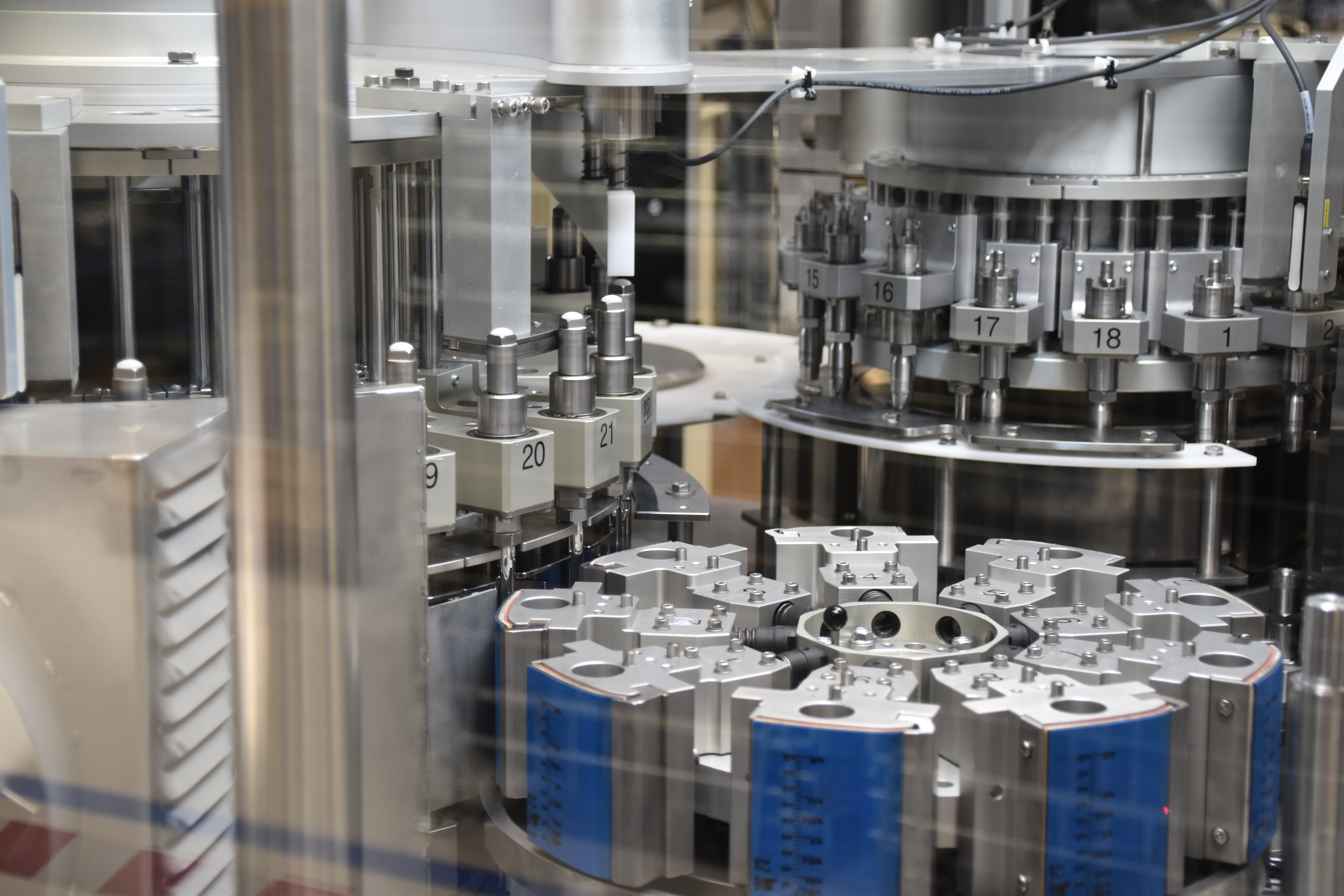
Selecting the process around the product
Each discrete product must be fed, oriented and located before printing. Its geometry determines where support is possible and how much force the printing surface can withstand.
| Application condition | Implication for printing |
|---|---|
| Product can be supported and rotated accurately | Dry offset or direct flexography may be suitable |
| Irregular or difficult-to-access print surface | A compliant pad may offer a suitable transfer method |
| Flexible wall with limited support | Printing force and product deflection require particular attention |
| Variation between cavities or molds | Trials should represent the actual range of incoming parts |
| Noncontact inkjet printing | Head-to-surface distance, runout and positioning still require control |
Inkjet removes mechanical contact between the printhead and the substrate. It does not remove the need for dimensional control. Curvature, runout and changes in the distance between the head and the surface affect droplet placement. Holding and rotating a flexible part can also deform it.
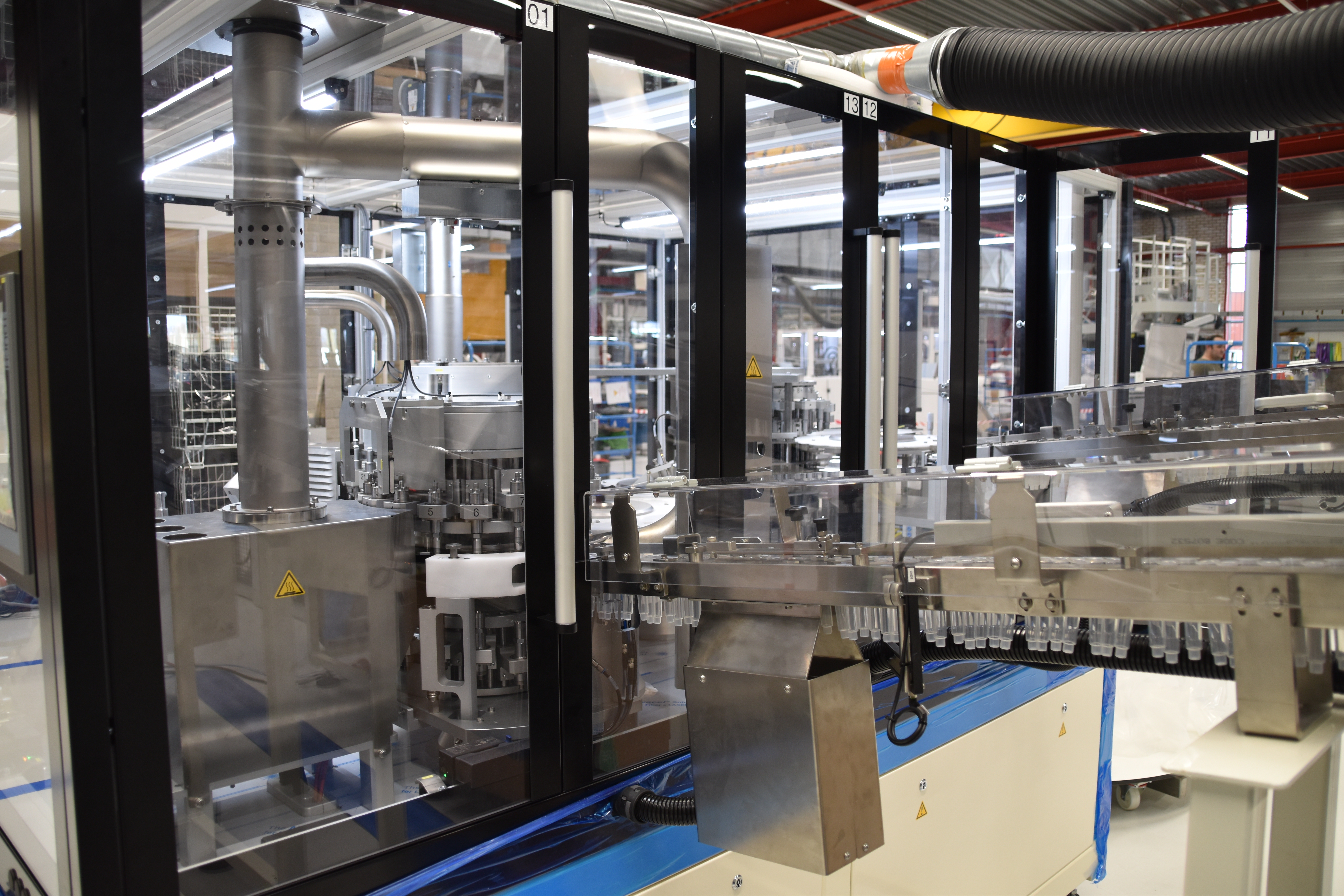
At AAE Automation, printing-method selection therefore includes product handling, tooling, surface preparation, curing and inspection. Trials should use parts representative of the intended production conditions. If printing takes place directly after molding, testing only stabilized parts can miss the behavior of freshly molded products.
A useful starting point is the product drawing, the artwork and representative samples from the molds and cavities that will supply production. Together, these allow the discussion to move from what a printing technology can achieve in principle to what the complete application requires.