Assembly
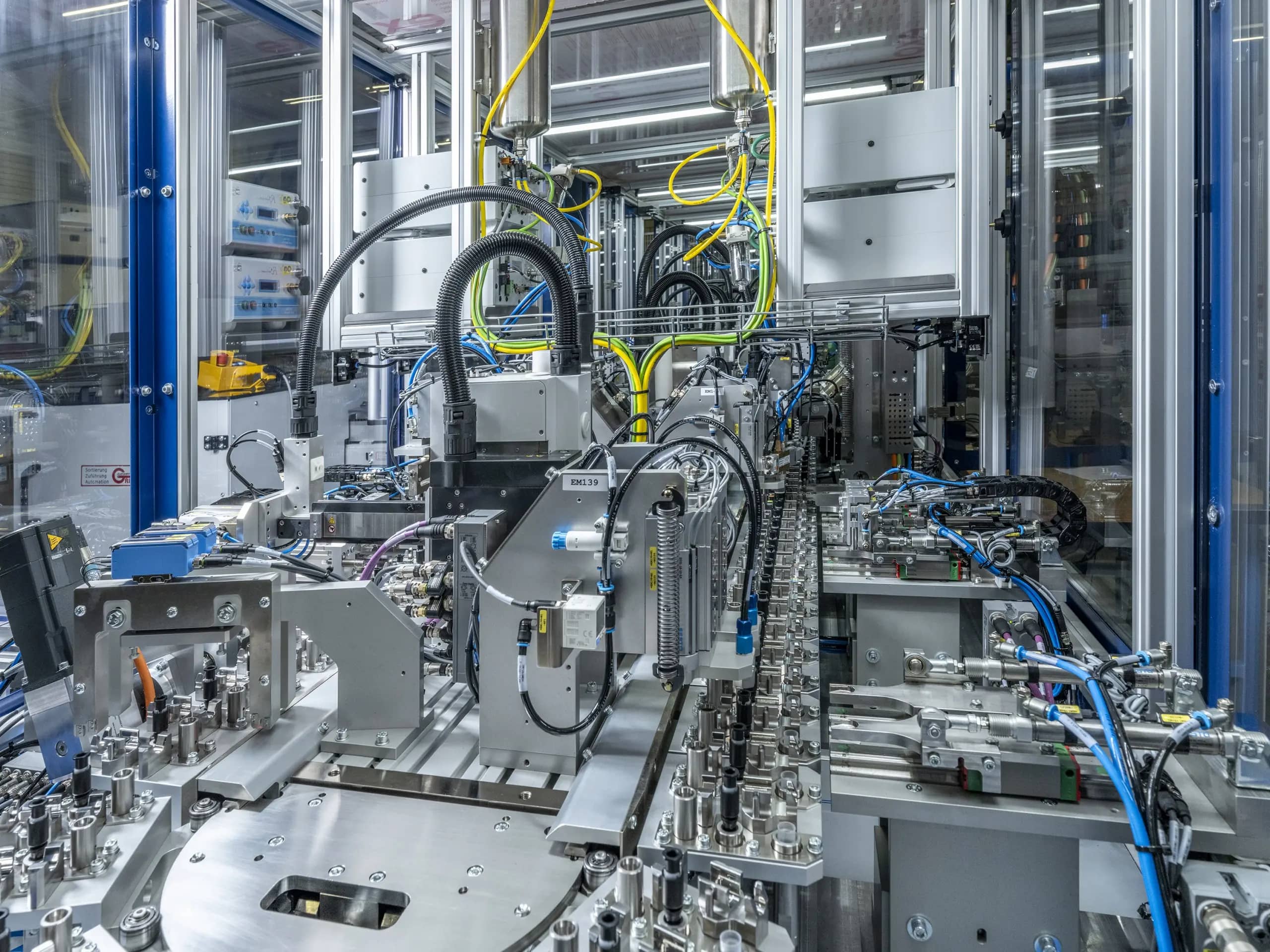
Assembly automation starts with a solid foundation: stable, predictable substrate handling. That’s exactly why we developed our own family of assembly platforms in-house – Cascade, Emerald, Viridian and Holly. Each platform is engineered around a specific strength in assembly technology, from ultra-high-speed continuous motion to precision indexing and flexible, robot-based handling. Together, they give us a robust base architecture for almost any assembly challenge.
On top of this platform foundation, we integrate best-in-class technologies from carefully selected A-brands. Think dosing, welding, curing, inspection, printing, feeding and more – all added as modular building blocks around our own motion and handling concepts. This approach lets us combine the reliability and lifecycle control of our in-house platforms with the innovation power and global service footprint of specialist suppliers.
Because we control the platform design ourselves, we can guarantee stable product handling, a coherent control architecture and a clear upgrade path over 15 to 20 years of operation. The A-brand technologies then plug into this backbone, giving you state-of-the-art functionality without sacrificing robustness, uptime or serviceability.
The result: assembly solutions that don’t just push technical boundaries, but do so in a structured, scalable way. Below, you’ll find a non-exhaustive overview of the technology solutions we integrate as part of our platform-based assembly offering.
Feeding
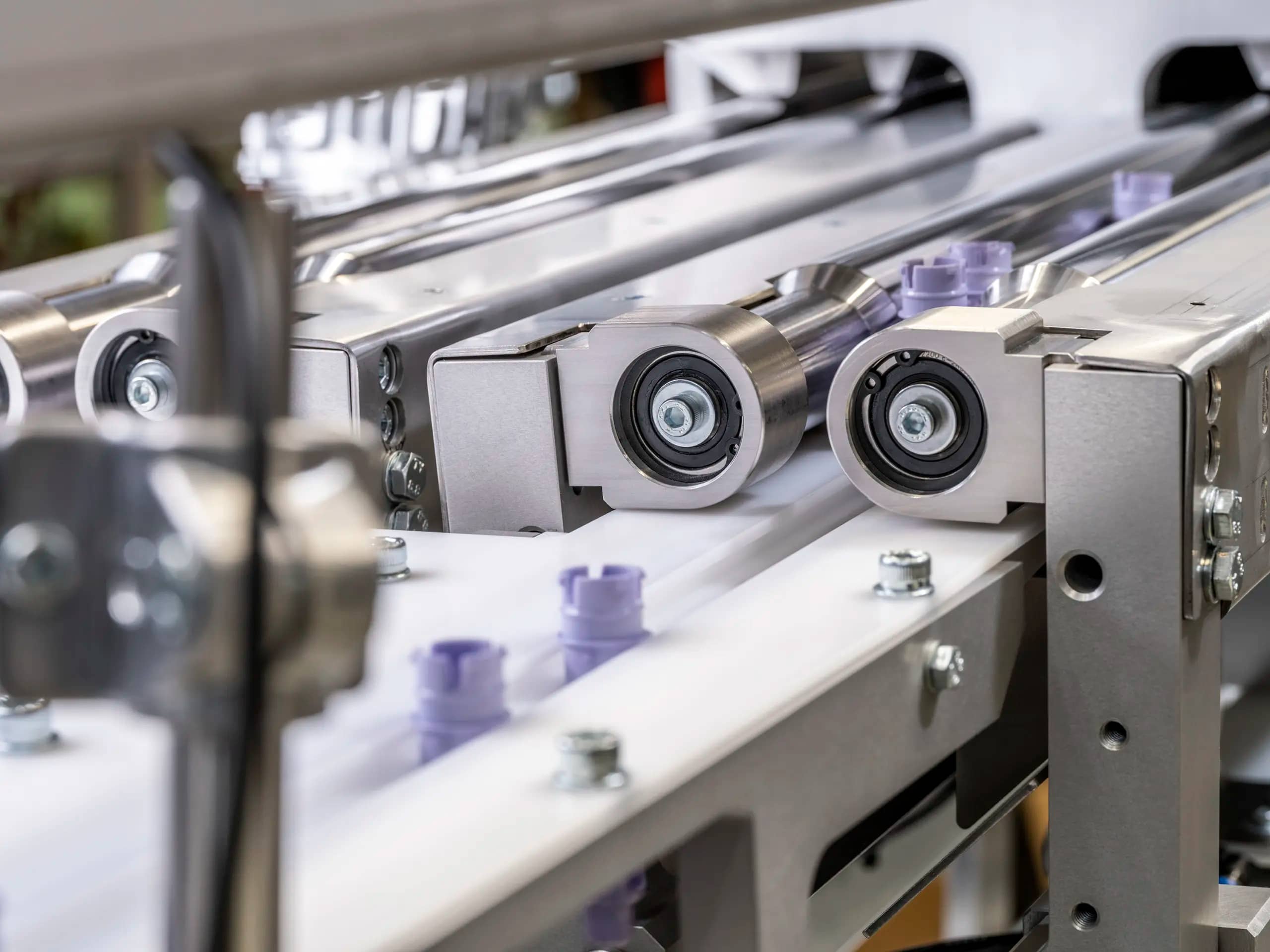
Feeding is a critical part of stable assembly, so we treat it as a key design focus. For the feeder systems themselves, we work closely with specialized A-brand partners and select the solution that best fits your product and process.
Our own added value lies in everything that happens around that feeder: we engineer the orientation, buffering and handover of parts before they enter the machine, and integrate this tightly with our Cascade, Emerald, Viridian and Holly platforms.
From linear and rotary vibratory feeding to centrifugal, roller and multi-lane systems, as well as robotic and manual feeding concepts, we apply the optimal combination for your application. The result is a reliable, repeatable product flow – the foundation for high-speed, high-quality assembly.
Ultrasonic Welding
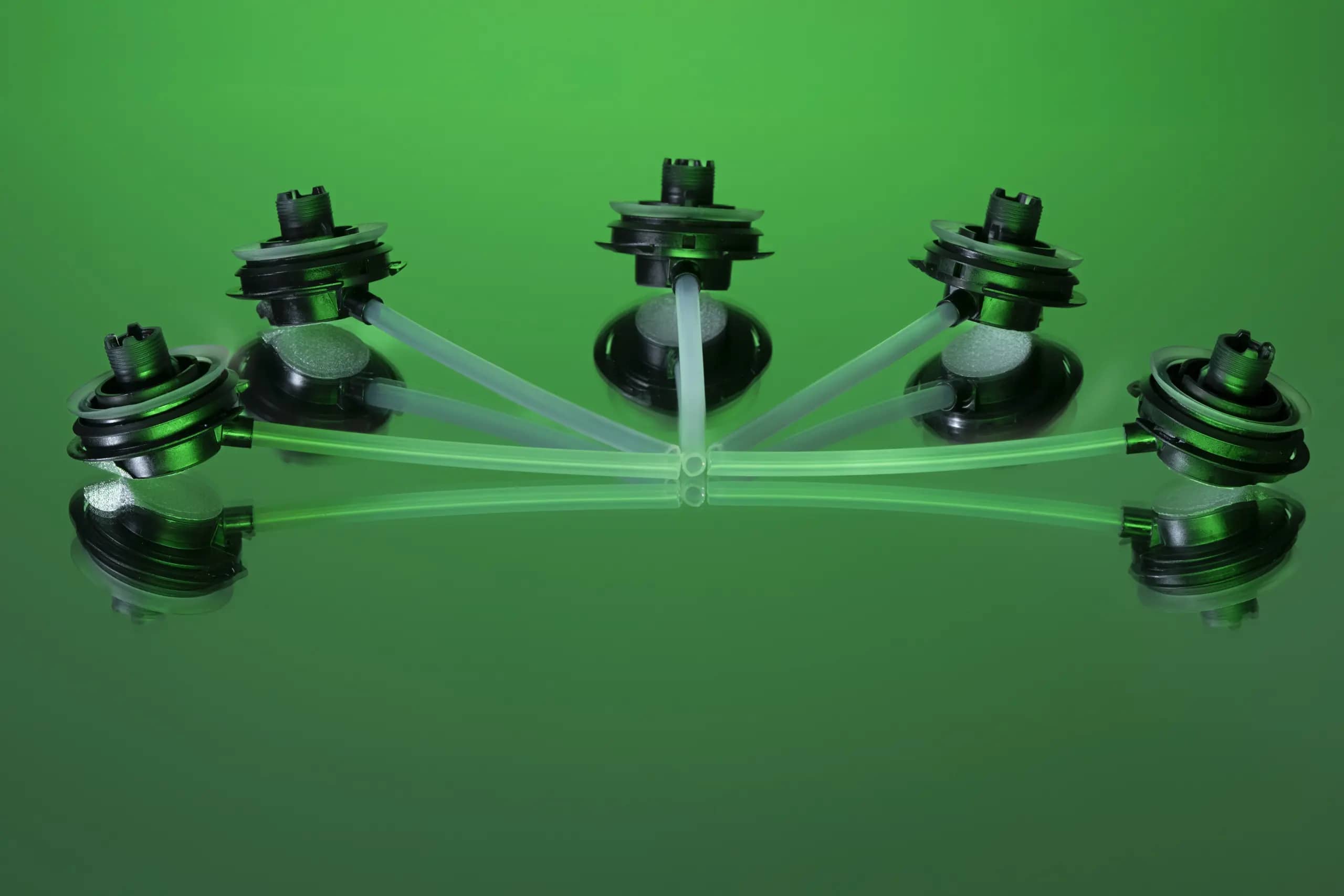
Welding is a core process in many of our platform-based solutions, so we integrate it directly into the machine cycle, both on continuous motion systems such as Cascade and Viridian, and on indexed motion systems such as Emerald. Ultrasonic welding is often built in as an in-cycle operation, ensuring consistent quality at high output.
Beyond ultrasonic, we also engineer solutions for spin welding, laser welding and electric welding of metal components. For each application, we select A-brand welding technologies that best match your materials, geometries and cycle time requirements, and integrate them tightly with our handling and control architecture.
The result is a welding process that feels like a natural part of the platform: stable, repeatable and tailored to the specific needs of your product and production environment.
Leak testing
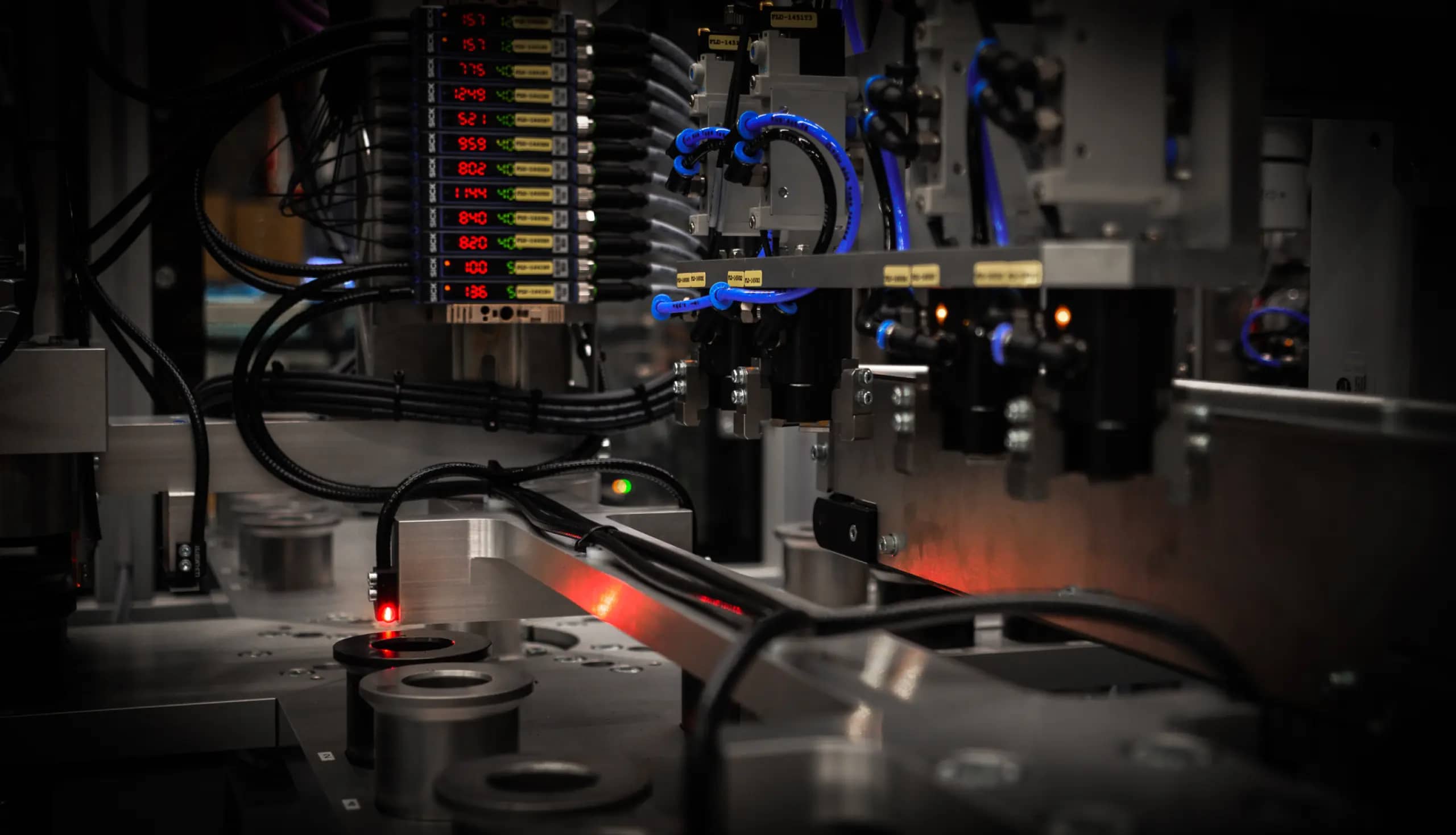
Leak testing is a crucial quality safeguard in many of the lines we build – sometimes at the end of the process, but just as often at the beginning, where only parts that pass are allowed further into assembly. That’s why we integrate leak testing directly into our automation platforms, whether the process runs on continuous motion (Cascade, Viridian) or indexed motion (Emerald), and always in close cooperation with specialized A-brand partners.
Depending on your requirements, leak testing can range from relatively fast checks to extremely sensitive measurements. When the required accuracy starts to affect cycle time, we design parallel testing concepts: multiple parts are tested simultaneously, often handled by robots, so you maintain both precision and throughput.
All relevant leak test data can be monitored in real time – by your own team and, if desired, by our service department. This shared view on performance makes it easier to spot trends early, fine-tune machine settings and keep quality and uptime under tight control throughout the lifecycle of your line.
Capping
All capping process data is available to your own team in real time, so you can monitor performance, spot trends and take action whenever needed. If desired, our service department can look along with you, using the same data to advise on preventive adjustments and improvements before they impact quality or uptime.
AAE designs and builds its own capping stations, for both continuous motion and indexed motion handling concepts within our platforms. The capping process can be controlled mechanically via a settable clutch, or via torque measurement using servo drives. Typical subprocesses such as height detection after capping and wind-back movements at the start of the process are fully integrated into the AAE machine cycle.
By combining in-house capping mechanics with smart data and control, we create a stable, repeatable capping process that fits seamlessly into your overall automation solution.
Force Measurement
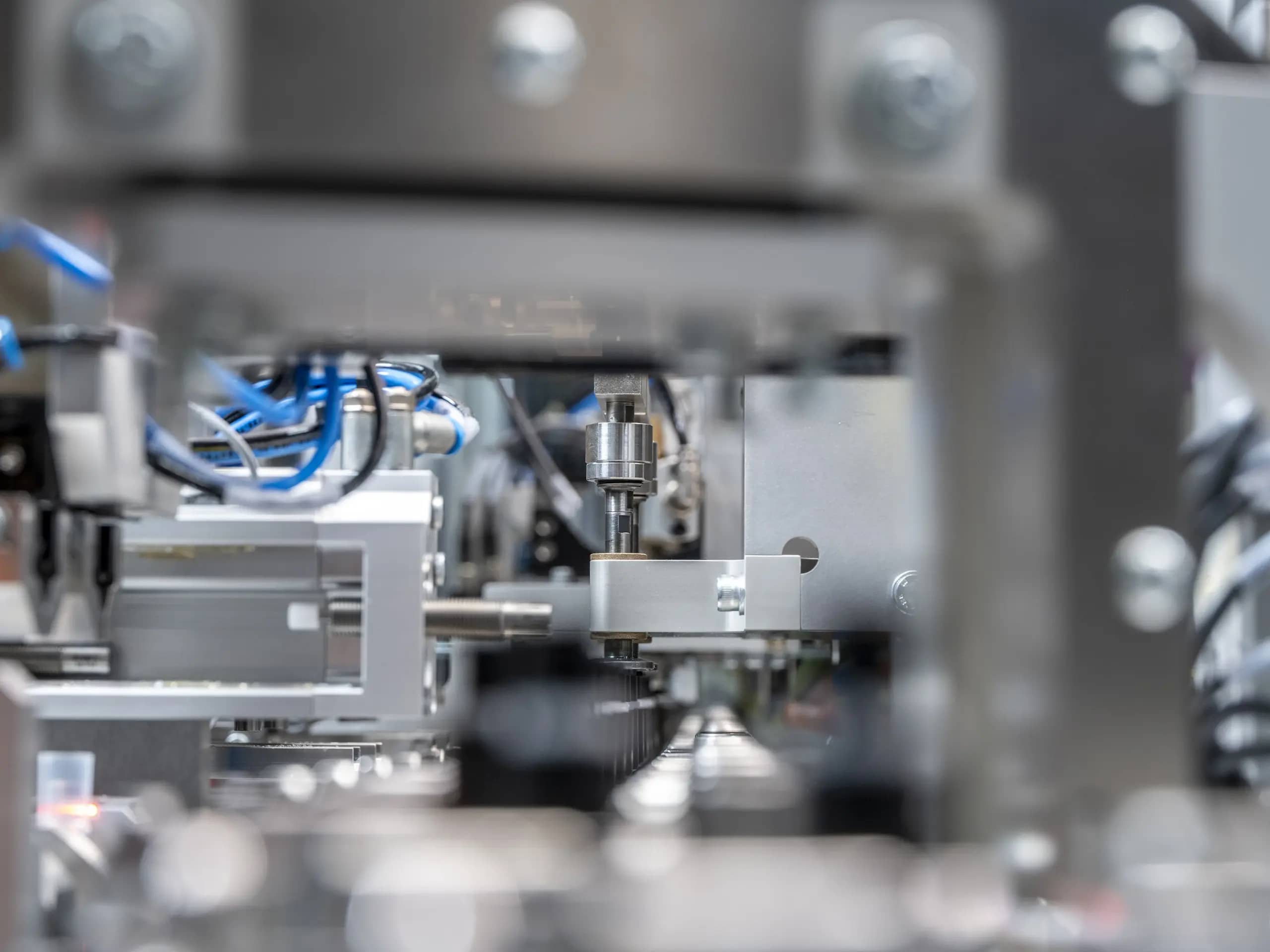
Force measurement is one of the quiet workhorses inside our assembly platforms. By measuring force during critical steps such as pressing, snapping, dosing or welding, the machine can “feel” what is happening, not just see it. That makes it much easier to detect deviations early, long before they turn into scrap or complaints.
Integrated into our Cascade, Emerald, Viridian and Holly platforms, force measurement helps define a clear fingerprint of a good process. When the profile starts to drift, the system can flag it immediately, so operators and process engineers can intervene, adjust settings, and keep quality within tight limits.
Over time, this data does more than just protect today’s production. It helps optimize process windows, stabilise cycle times, and improve overall consistency. In short, force measurement turns each assembly step into a source of insight, supporting higher product quality and more predictable output across the full lifecycle of your line.
Labelling
Labeling may look simple from the outside, but in automated assembly it plays a key role in both product identity and traceability. That is why we integrate labeling systems directly into the machine cycle, so label placement becomes a stable, repeatable step rather than an add-on at the end of the line.
Our solutions handle a wide range of label types: from branding and marketing labels to barcodes, unique identifiers, safety warnings and instructions. Each label is applied consistently and accurately to the right product, at the right position and orientation, even at higher speeds.
By automating labeling in this way, you reduce the risk of human error and create a predictable, high-throughput process. Depending on product geometry and label size, these integrated concepts can handle hundreds of products per minute, while still offering the flexibility to switch formats and variants as your portfolio evolves.
Packaging
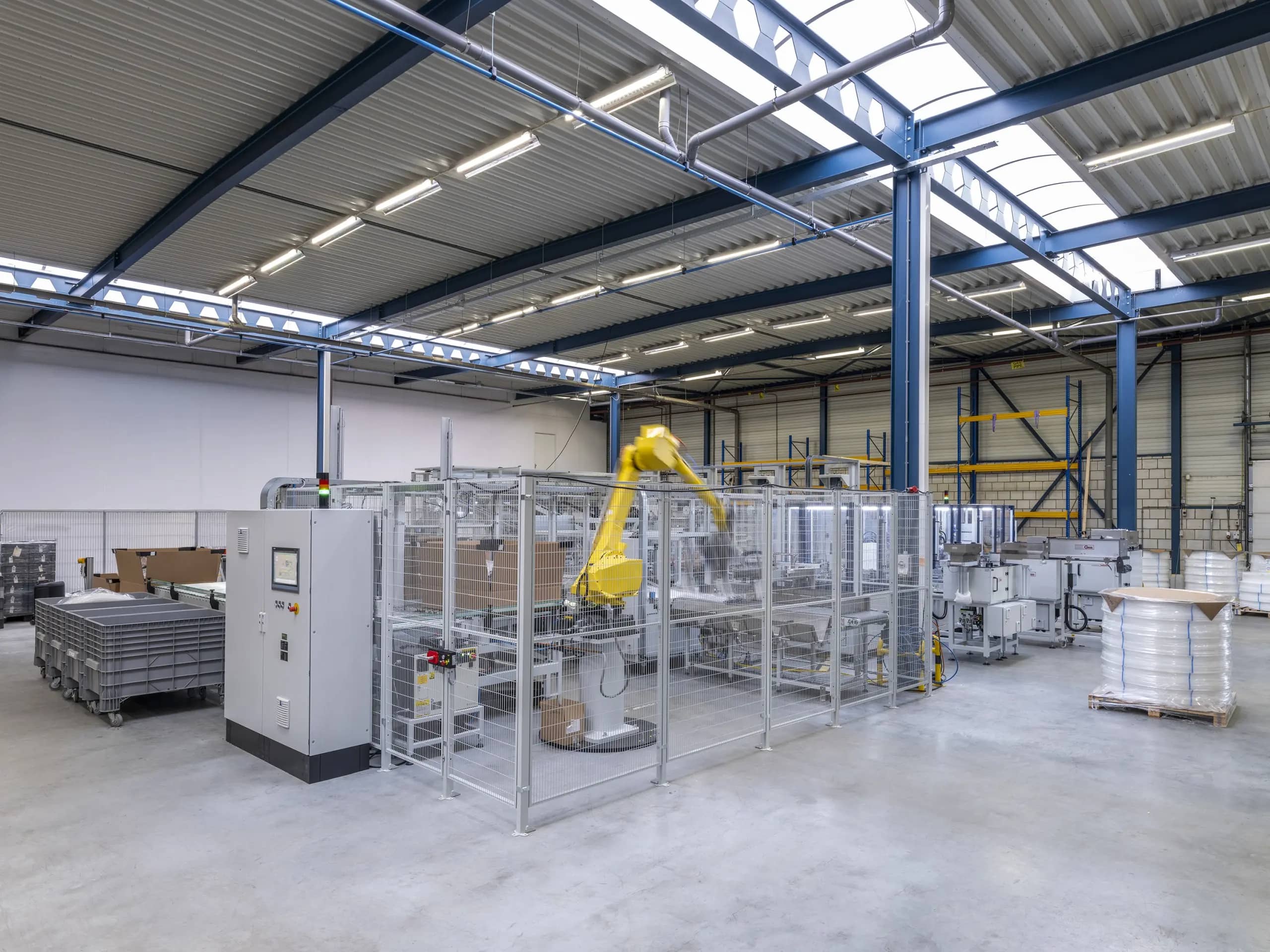
Packaging is where automation, product and presentation all come together – and it is exactly the kind of challenge our Holly-style cells are built for: robots, cobots and smart handling working around your chosen packaging concept.
At AAE, we don’t design packaging formats or machines ourselves. Instead, we team up with you and your packaging partners, taking their designs and equipment as the starting point. Our job is to make everything around it work flawlessly: infeed and outfeed, buffering, orientation, robot motion, guarding, changeovers and communication with the rest of the line.
By focusing on integration, we turn standalone packaging ideas into fully embedded, end-of-line solutions. The result is a packaging process that runs efficiently, reliably and in compliance with your standards – and can be adapted over time as products, formats or volumes change. You get the combined strength of your packaging specialists and our automation expertise, brought together in one coherent system.
Camera Inspection
Visual inspection is one of the most powerful quality tools inside our machines. We integrate camera inspection directly into assembly and printing processes, so every critical feature can be checked in-line, at speed.
Depending on the application, we use 2D and 3D camera solutions, based on both area-scan and line-scan technologies. A 2D system is not automatically “simple” – for example, an area-scan camera combined with part rotation and smart lighting can solve very complex inspection tasks, all PC-controlled and tightly linked to the machine control.
For applications that demand it, we add 3D inspection to measure height, shape or volume with high precision. In every case, the goal is the same: reliable, automated inspection that catches deviations early, supports process optimisation and secures consistent product quality over the full lifecycle of your line.